
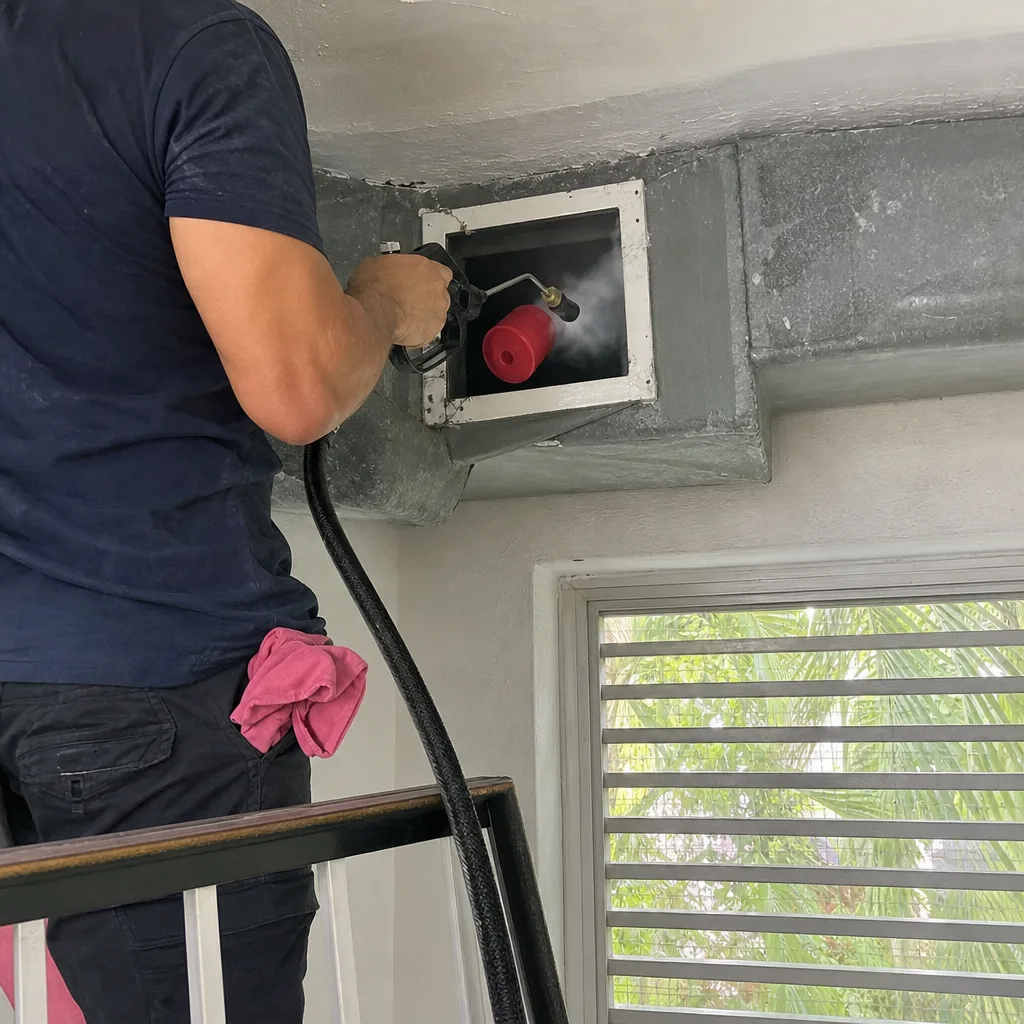
Last updated November 24, 2026
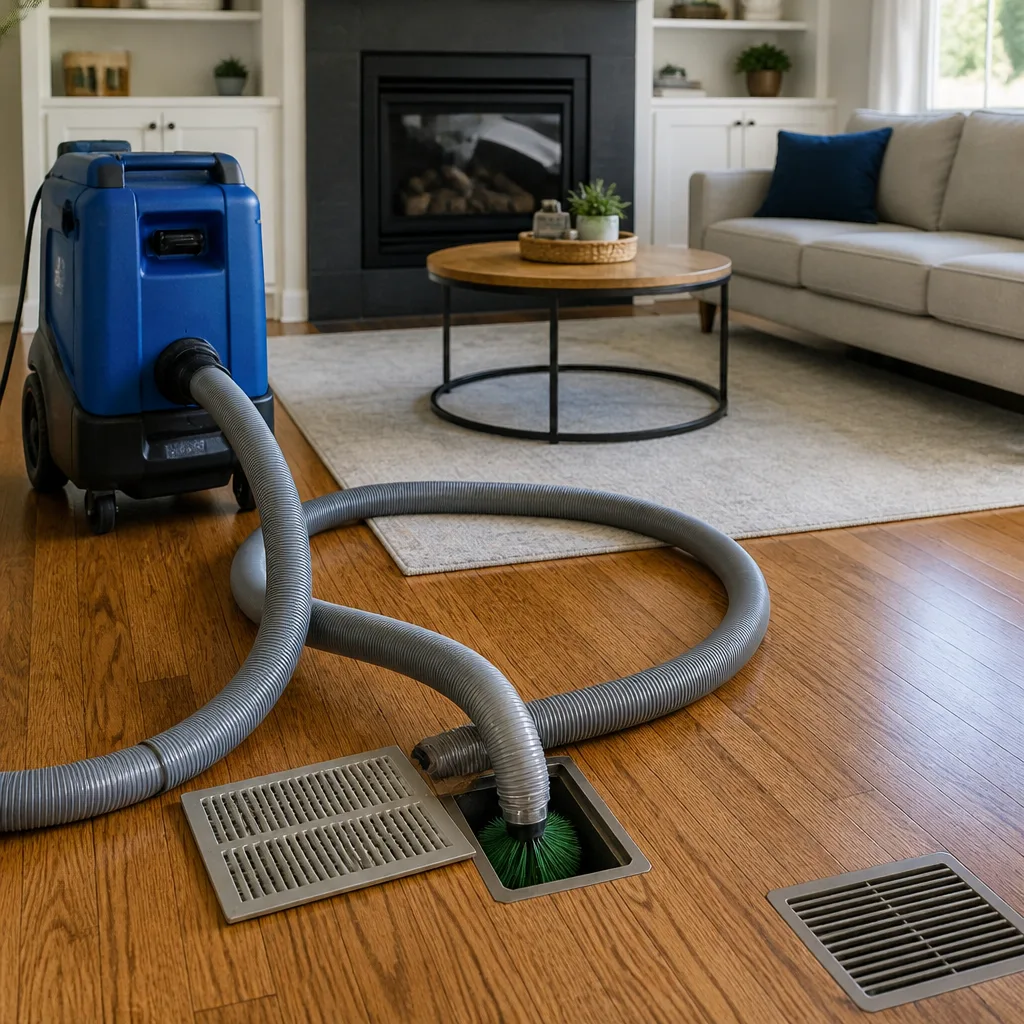 Whole-home duct cleaning
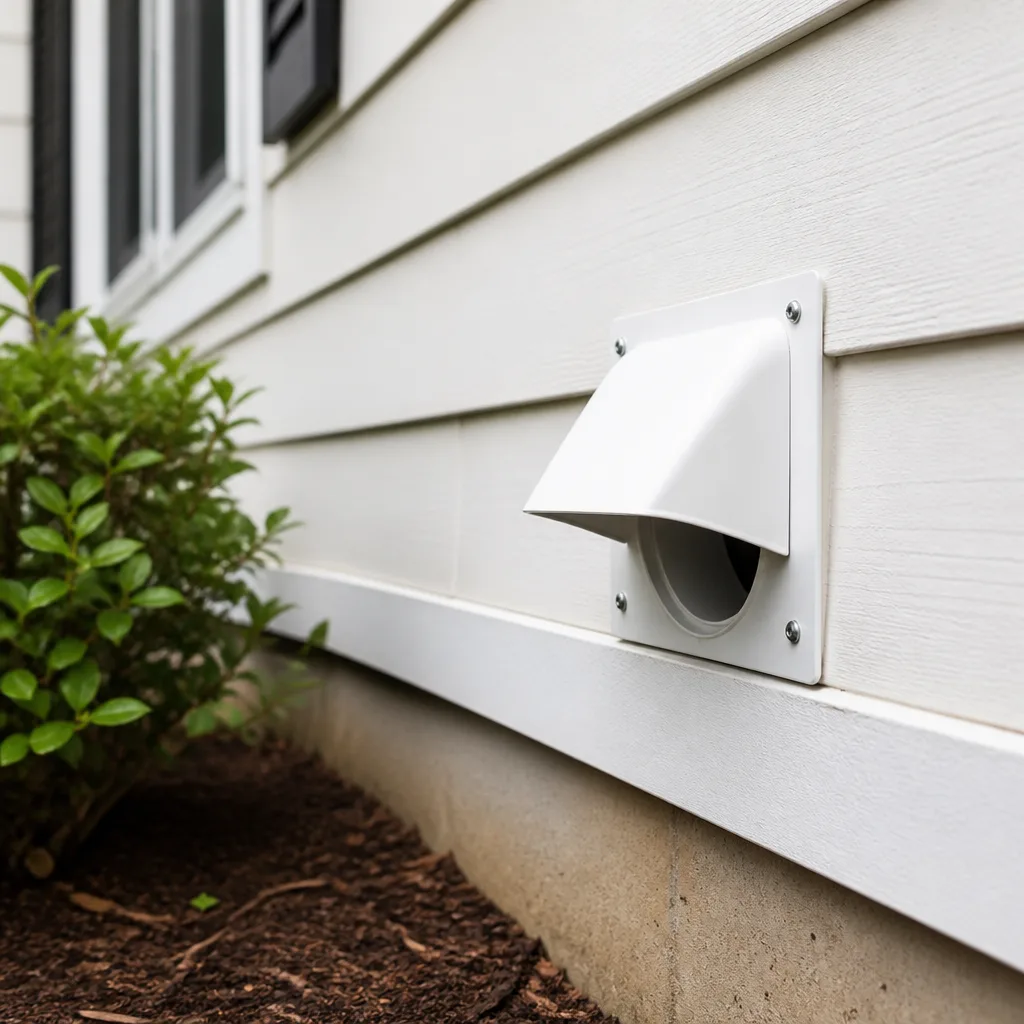 Dryer vent cleaning
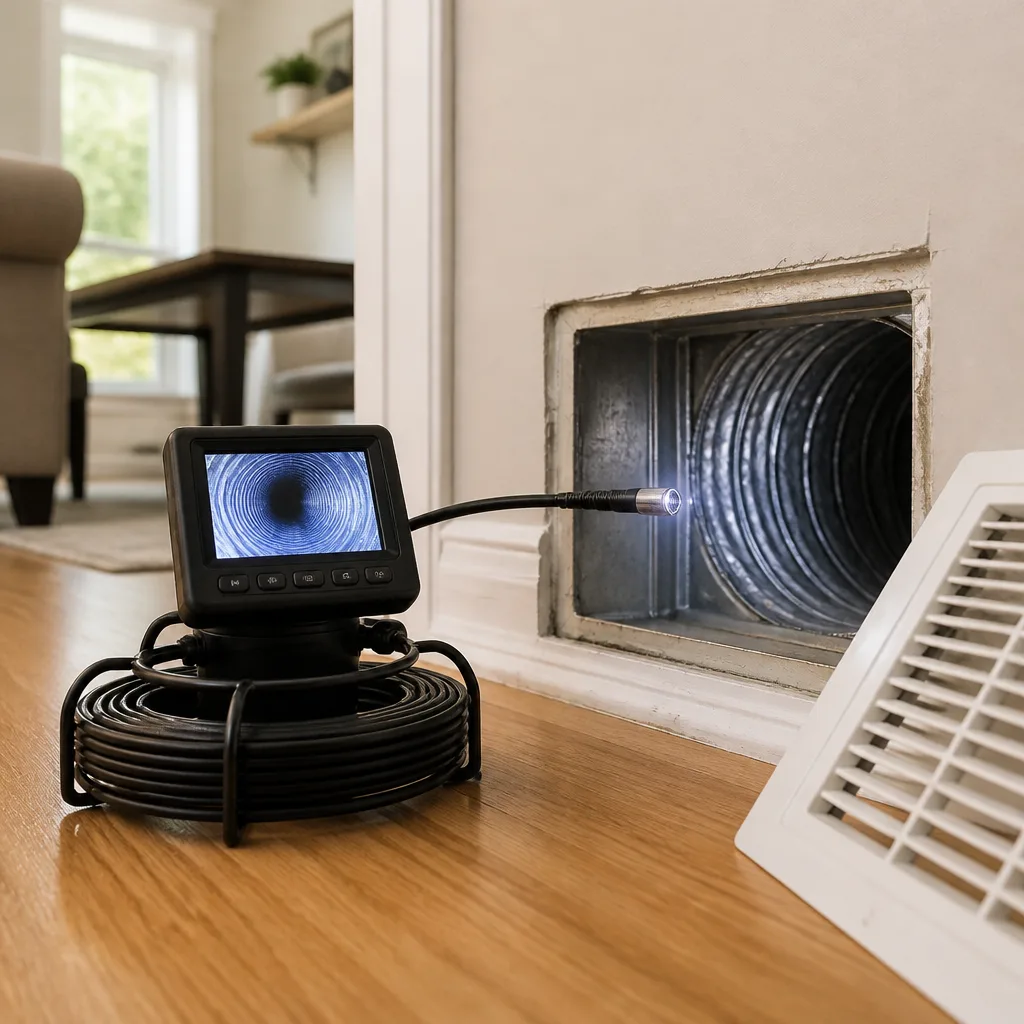 Camera inspection
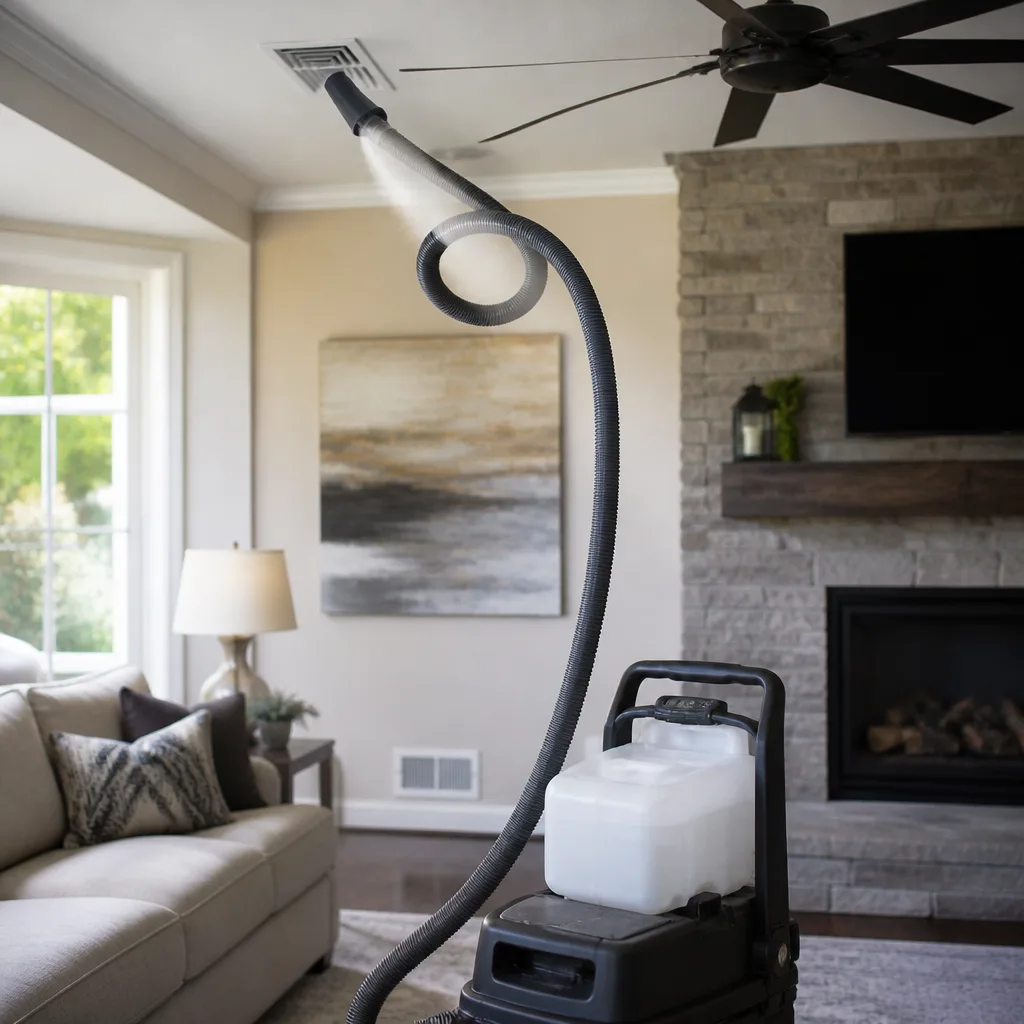 Sanitizing & deodorizing
Whole-system duct and dryer vent check with before-and-after photos - you see exactly what came out of your vents
That "$99 whole-house special" is a bait ad - the real number appears once they are in your hallway, or the "clean" is a shop-vac at the register. We photograph the inside of your ducts before and after instead.
Air Duct Cleaning Permits, Codes & Inspections in South Beach, NY: What You Need to Know
A company that cleans your ducts and then offers to seal them or run new flex duct is doing two legally different kinds of work. Only one of those typically needs a licensed mechanical contractor and, in many cases, a permit in New York State. That line is fuzzy in most homeowners’ minds, and it’s exactly where projects get expensive or, worse, flagged during a home inspection. Here you’ll learn where routine air duct cleaning stops and permitted HVAC work begins in South Beach, how New York’s mechanical codes apply to work inside an existing duct system, and what to keep on file if the job touches a sale or an insurance claim.
Quick Answer
Routine air duct cleaning in South Beach, NY is maintenance, not construction, and does not require a permit. The picture changes the moment the scope includes duct sealing with mastic or new sheet metal, replacing a section of duct, cutting a new supply or return, or modifying the air handler. Those are mechanical-code items, and they typically require a licensed HVAC contractor and often a permit from the local building department. If a quote combines cleaning with anything that alters the system, ask who’s licensed for the mechanical portion before you agree to it.
Styles & brands we work with
- Whole-home duct cleaning
- Dryer vent cleaning
- Camera inspection
- Sanitizing & deodorizing
Table of Contents
- Cleaning vs. Modification: The Legal Line in New York
- When the Mechanical Codes Get Triggered
- How to Verify a Contractor’s Mechanical License
- What Documentation to Keep for a Sale or Claim
- Building Age and Occupancy Type in South Beach
- What an Inspection Looks Like and What Inspectors Check
- Five Questions to Ask Before Any Duct Job Begins
- Why Equipment Choice Signals Scope Discipline
Cleaning vs. Modification: The Legal Line in New York
Here’s the distinction that matters: cleaning removes accumulated debris from an existing duct system without changing the system. Modification changes it. New York treats these differently under its mechanical codes, and the difference isn’t cosmetic. Cleaning is a maintenance activity. Modification is construction work that falls under mechanical-code requirements and, in most municipalities, contractor licensing rules.
In practice, cleaning involves mechanical agitation (rotary brushes, air whips) and high-volume negative pressure extraction. The ducts end up cleaner than they started. Nothing is added, removed or rerouted. A whole-system job in South Beach usually includes the main trunk lines, the branch runs to each register, the plenum at the air handler, and often the blower compartment itself.
Modification, by contrast, involves one or more of the following:
- Cutting or adding a supply or return register
- Replacing a length of duct, or converting rigid duct to flex (or the reverse)
- Sealing joints with mastic, foil tape or aerosol sealant as a system-level repair
- Resizing a trunk line to fix static pressure problems
- Opening the air handler to modify the coil, plenum or transition
- Installing new insulation or a liner inside a duct
Every item on that list touches the system’s design or performance envelope. In most South Beach buildings, and in most New York jurisdictions, that’s permitted mechanical work, and it needs someone licensed to do it. Cleaning doesn’t. Once you can spot the line, quotes make far more sense, and so do the requirements a contractor shows you.
When the Mechanical Codes Get Triggered
New York’s mechanical codes exist to make sure duct systems move the right volume of air, are sealed properly, and are fire-safe where they pass through walls and floors. They don’t get triggered by a cleaning. They get triggered by work that alters the system’s configuration, capacity or fire integrity.
The clearest triggers for a residential duct job:
- New or relocated registers. Adding a supply or return, or moving one, means a new penetration through a wall, floor or ceiling assembly, which affects the building envelope and air distribution.
- Duct material or size changes. Swapping rigid duct for flex (or a different gauge of sheet metal) changes friction loss and airflow balancing.
- Penetrations through rated assemblies. Where a duct passes through a fire-rated wall or floor, the code cares about how that opening is protected. New work there is a permit item.
- Air-handler modifications. Changing the plenum, coil enclosure or transition at the unit is mechanical work, not cleaning.
- Sealing as a system repair. Aerosol or mastic sealing applied as a performance fix (rather than a spot touch-up at a joint during cleaning) usually crosses into mechanical scope.
None of this has to happen in a well-run cleaning. A good South Beach duct crew stays inside the system and leaves the configuration alone. If a technician opens the conversation with “you also need a new return here,” the next question is whether they’re licensed for that or whether they need to bring in someone who is. Asking this before work starts is far easier than sorting it out after.
How to Verify a Contractor’s Mechanical License
Licensing in New York isn’t one statewide license: it runs through state, county and municipal channels, and the requirements vary by jurisdiction. If a quote includes any of the modification items above, verify that the person doing that portion of the work holds the appropriate license for the job. Here’s the process we’d walk a South Beach homeowner through:
- Ask for the license number and the issuing authority in writing. “We’re licensed” isn’t verification. The license number and the department that issued it are.
- Check the license against the issuing authority’s records (the state or the local building department, depending on where the license comes from). Most publish a lookup or will confirm by phone.
- Confirm the scope the license covers. A license to clean ducts is not the same as a license to perform mechanical work. Ask specifically.
- Match the license to the entity on the contract. A license held by one company doesn’t cover work performed by another unless the arrangement is disclosed and properly structured.
- Ask who pulls the permit. In most New York jurisdictions, the licensed contractor pulls the permit for the permitted portion of the work. If a company offers to have you pull it, ask why.
- Verify insurance for the licensed scope. General liability and workers’ compensation coverage should be confirmed for the work being done, not just for the cleaning.
If the scope is cleaning only, this list still applies, just more lightly. A general liability certificate and a clear scope of work are the two things you want before anyone puts a brush in your ductwork. The same discipline applies when you’re booking dryer vent cleaning, which is a separate trade but follows the same documentation logic.
What Documentation to Keep for a Sale or Claim
Duct work that reads as either routine or significant later depends entirely on what got written down now. If you’re going to be selling a South Beach property, or might need to file an insurance claim that touches HVAC or duct systems, hold onto these documents:
- The written estimate and final invoice, with the scope of work spelled out (cleaning vs. repair vs. modification).
- The contractor’s name, license info for any mechanical work, and insurance certificate.
- A before-and-after photo record of your own ducts. A good crew takes these anyway; ask for a copy.
- Any permit numbers and inspection sign-offs associated with the permitted portion of the work.
- Manufacturer documentation for any parts or materials installed (mastic, foil, liner, sealing compound, filtration hardware).
- A receipt showing what products were used if sanitizing was included. Brand names matter here; on our jobs that will often read as Guardsman-class sanitizers and Abatement Technologies equipment for contamination scenarios.
For a home sale, a buyer’s inspector will look at the visible ductwork, the registers and the plenum. They’ll usually ask “has this system been cleaned or altered recently?” Having a packet that answers that clearly, with photos and invoices, is worth a lot during a negotiation. A permit record for any modification is even better. Sellers who can’t produce one often end up giving a credit at closing that reads as far larger than the work ever was.
Building Age and Occupancy Type in South Beach
South Beach’s housing stock runs the spectrum: mid-century single-family houses on side streets, older two- and three-family buildings with shared mechanical chases, and mid-rise and low-rise apartment buildings where the duct system is a shared asset. Each type shifts the regulatory picture.
Single-family homes. Straightforward. A permitted modification goes through the local building department, and the permit record lives with the property. Cleaning is maintenance with no permit. The most common regulatory nuance here is when a homeowner adds a return or a new supply during a renovation; that’s a permit item even if the rest of the project is being done without one.
Two- and three-family buildings. In South Beach, these often have duct runs that pass between units or through a shared mechanical chase. Modifications there can affect fire separation, which sends the work straight into mechanical-code and often fire-code review. A cleaning that stays inside the existing system doesn’t touch any of that, but any duct repair that crosses a unit separation deserves scrutiny.
Multi-unit and light-commercial buildings. Here the work is often coordinated with a property manager, and the rules depend heavily on what the building’s own mechanical inventory already includes. If the building has a commercial-grade filtration system by Aprilaire or Honeywell, technicians need to know the equipment before touching the system, especially at the air handler and the return-side filtration. Pulling the wrong filter housing, or sealing the wrong joint in a shared system, produces complaints across multiple units. For multi-unit work, coordinate scope and documentation with the property manager before the crew arrives.
Older work also carries a different kind of inspection weight. If a South Beach building is older, a duct inspection may find systems that have been modified over the years by different contractors. Documenting what exists before any new work is the safest starting point, particularly where the work involves sealing or new duct runs.
What an Inspection Looks Like and What Inspectors Check
A duct inspection is different from a cleaning. Cleaning is about removing debris; the inspection is about verifying the system’s condition, its installation and, where applicable, that any permitted work was done correctly. Most South Beach inspections fall into three categories.
Home sale inspection
A buyer’s inspector will typically look at:
- Visible ductwork in accessible areas (basement, attic, crawlspace, utility closets)
- Junctions where two duct sections meet, and any place sealant or tape has been applied
- Registers and grilles for signs of previous modification or retrofitting
- The air handler: condition, filter setup, and whether the plenum looks original
- Any evidence of moisture, mold or rodent activity in the system
Anything the inspector flags is likely to end up in the buyer’s request list. Having recent cleaning records and a photo log makes the conversation very short.
Municipal inspection (post-permit)
If the mechanical work was permitted, a municipal inspector will review the permitted portion only. That means verifying the installation matches the submitted scope: duct sizing, sealing, support, fire separation at penetrations, and the air-handler work if that was included. They check the permit items; they don’t check whether the ducts are clean. Cleaning has no municipal inspection step.
Insurance inspection
Where an insurance claim touches HVAC or duct systems, the insurer may want evidence of the condition before and after, and confirmation the work was performed by a qualified contractor. Documentation matters here more than in the other two, because the claim decision hinges on it. Photos, invoices, license records and product documentation for any installed materials are the package.
Five Questions to Ask Before Any Duct Job Begins
These are the five questions we’d want every South Beach homeowner to have answered in writing before signing:
- What’s the exact scope? Cleaning only, cleaning plus sealing, or cleaning plus modification. The line between the last two is where permits and licensing kick in.
- Who’s doing which portion? If the cleaning company is separate from the licensed mechanical contractor, get the split spelled out on the estimate and the contract.
- What license covers the mechanical work, and who verifies it? If the answer is vague, that’s the signal.
- Will a permit be pulled? For any permitted work, the answer is yes, and the contractor of record should pull it.
- Will I get before-and-after photos of my own system, and a written close-out showing what was done and by whom? The photo record is the single most useful document you’ll keep.
Any contractor who can answer those five cleanly is likely to also be the one who runs proper equipment in the first place. A whole-system job with genuinely thorough extraction tends to need fewer follow-up repairs than one that started with a shop vac and a sales pitch.
If you’re also looking at the broader relationship between duct condition and the rest of the system, our HVAC cleaning page walks through what a full-system service involves.
Why Equipment Choice Signals Scope Discipline
The equipment a company brings tells you a lot about whether they know where the legal line is. A crew that shows up with just a portable vacuum is going to sell you what they can do, not what the system needs. A crew that brings proper rotary brush and negative pressure systems is set up to do the maintenance work cleanly and to recognize when the scope is no longer maintenance.
On our South Beach jobs, the standard setup is Rotobrush rotary-brush extraction for wall-to-wall agitation, paired with a Nikro negative-pressure system to hold and exhaust dislodged debris. That’s the same class of equipment commercial and industrial contractors use, scaled for residential and light-commercial work. When a job involves suspicion of mold, heavy allergen loads or post-renovation contamination, Abatement Technologies equipment lets the crew handle the remediation piece properly.
Where a system already has branded filtration and air-quality hardware installed, technicians need to recognize it and know how it interacts with cleaning. Aprilaire whole-home filtration units and Honeywell components show up in a lot of South Beach homes, and touching that hardware without knowing the brand and model is a recipe for warranty problems. Knowing the equipment is part of staying inside scope, and it’s how a cleaning company avoids accidentally wandering into mechanical work it’s not licensed to perform.
A system that’s clean, sealed at the joints and running quality filtration works better than the same system with any one of those three missing. That’s the practical argument for treating cleaning, sealing and filtration as a coordinated set rather than three separate purchases. If a company can connect them, you get more from each one.
Common Mistakes to Avoid
- Assuming cleaning and sealing are the same category of work. They aren’t, and the difference in South Beach comes down to whether the work changes the duct system. A cleaning that touches inside the system doesn’t change it; a sealant job that changes the system does.
- Accepting a bundled quote without a scope breakdown. If a single price covers cleaning plus “repairs to the ductwork,” ask for the scope to be split so you can see which portion is licensed mechanical work.
- Failing to verify the license against the issuing authority. A license number on an invoice is a starting point, not a verification. Confirm it against the state or local records, especially for duct modifications.
- Not keeping the photo record from a job that touches a sale. Buyers and their inspectors almost always ask. Photos and invoices answer the question in a minute; the absence of them turns into negotiation.
- Letting a cleaning crew touch the air handler without confirming scope. In a South Beach home, the plenum and coil enclosure are mechanical territory. Cleaning around them is fine; modifying them isn’t.
- Booking a cleaning and a duct modification in one visit without confirming the second is permitted. Two legally distinct jobs need two scopes, and where code requires it, the modification needs its own paper trail.
- Overlooking the multi-unit implications. In a shared system, a single modification can affect other residents. If you’re a landlord or property manager in South Beach, get the building’s ownership or management to sign off on scope before the crew arrives.
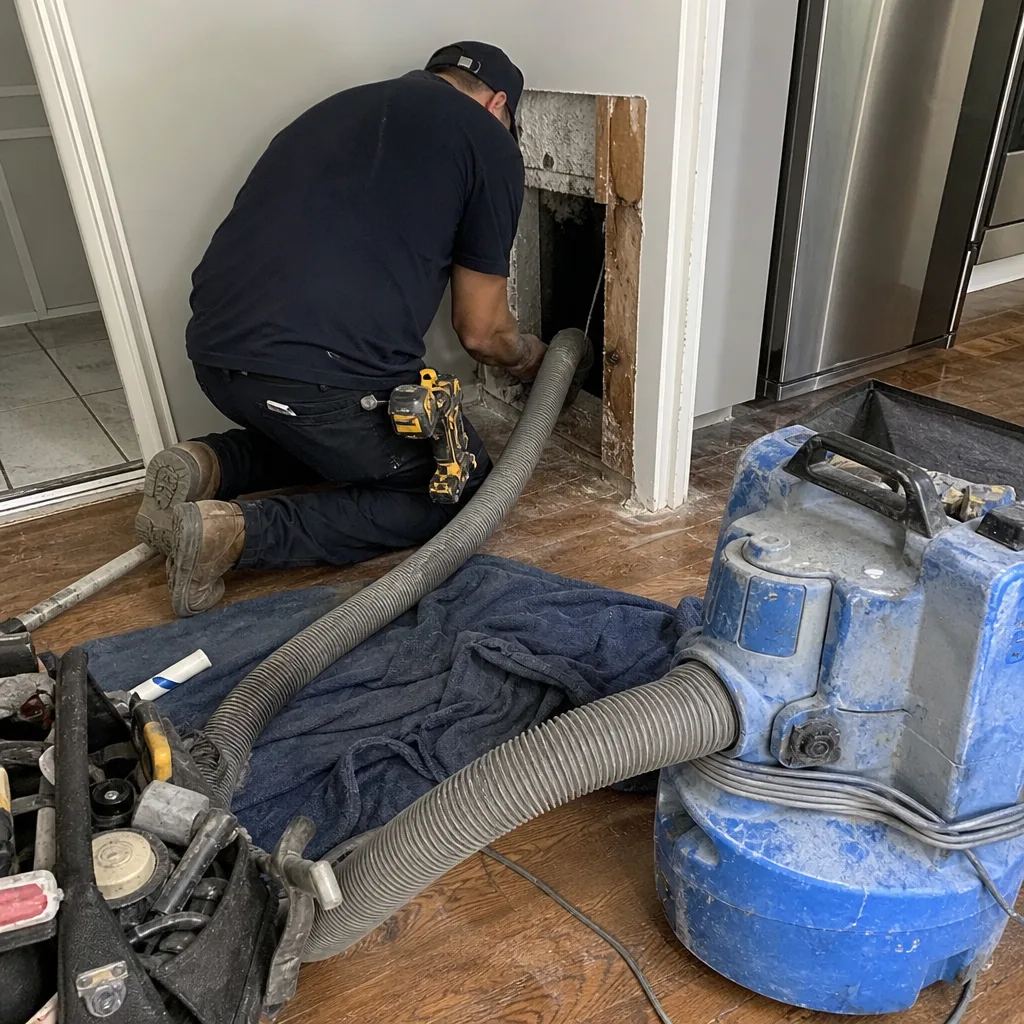
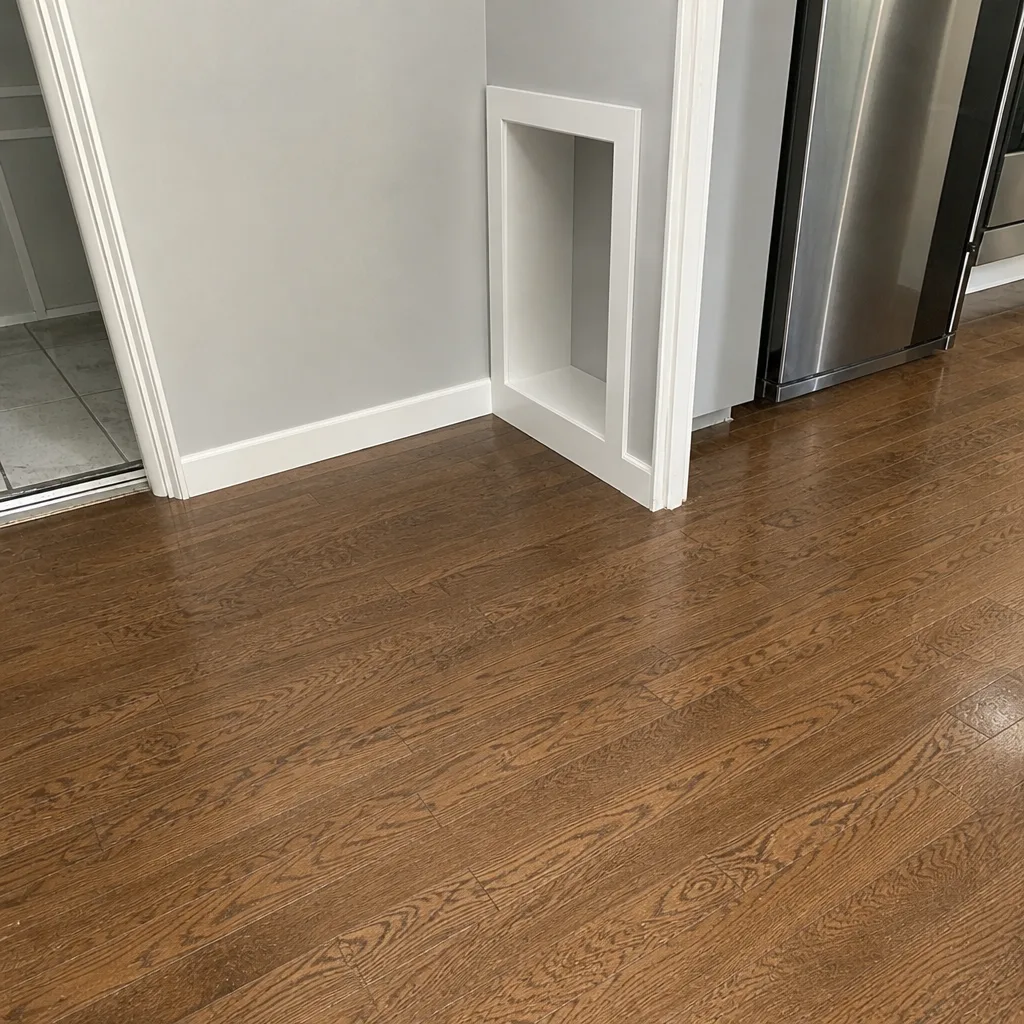
See the difference
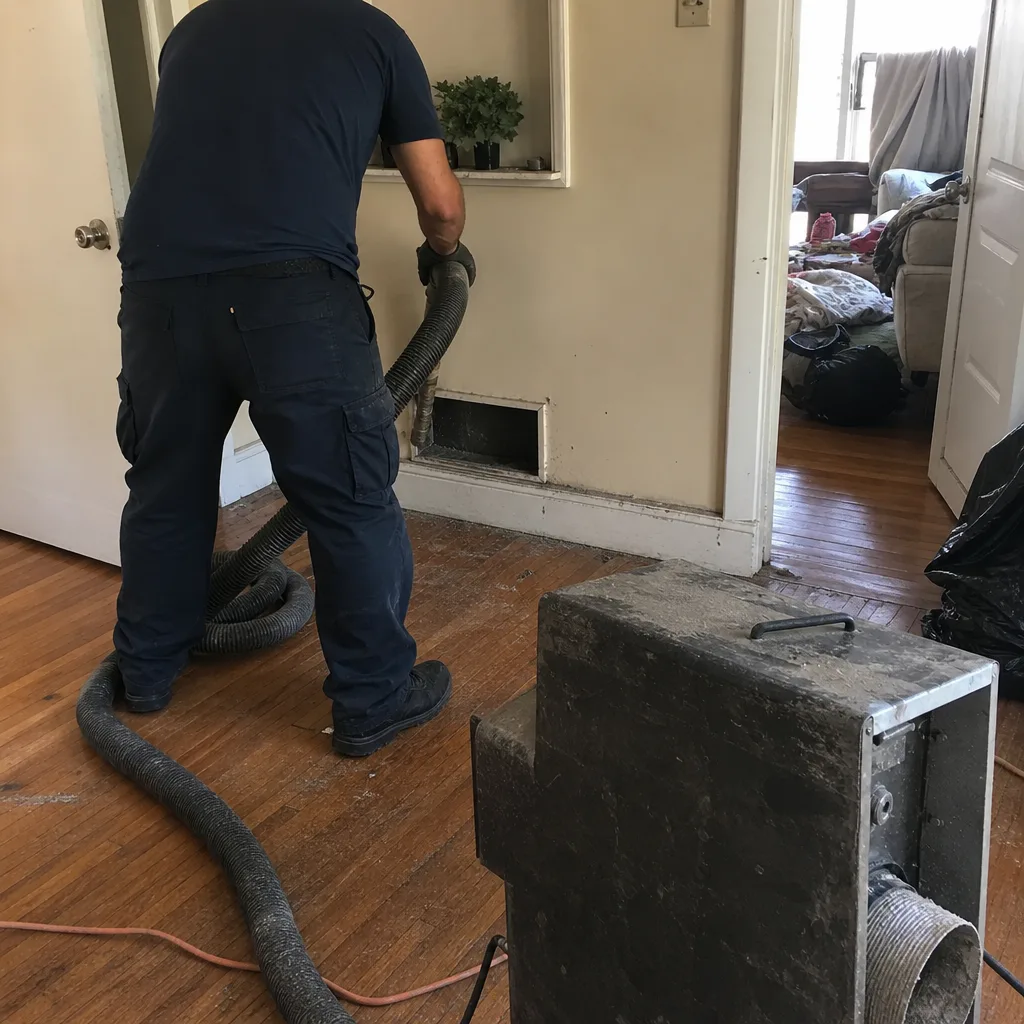 Before
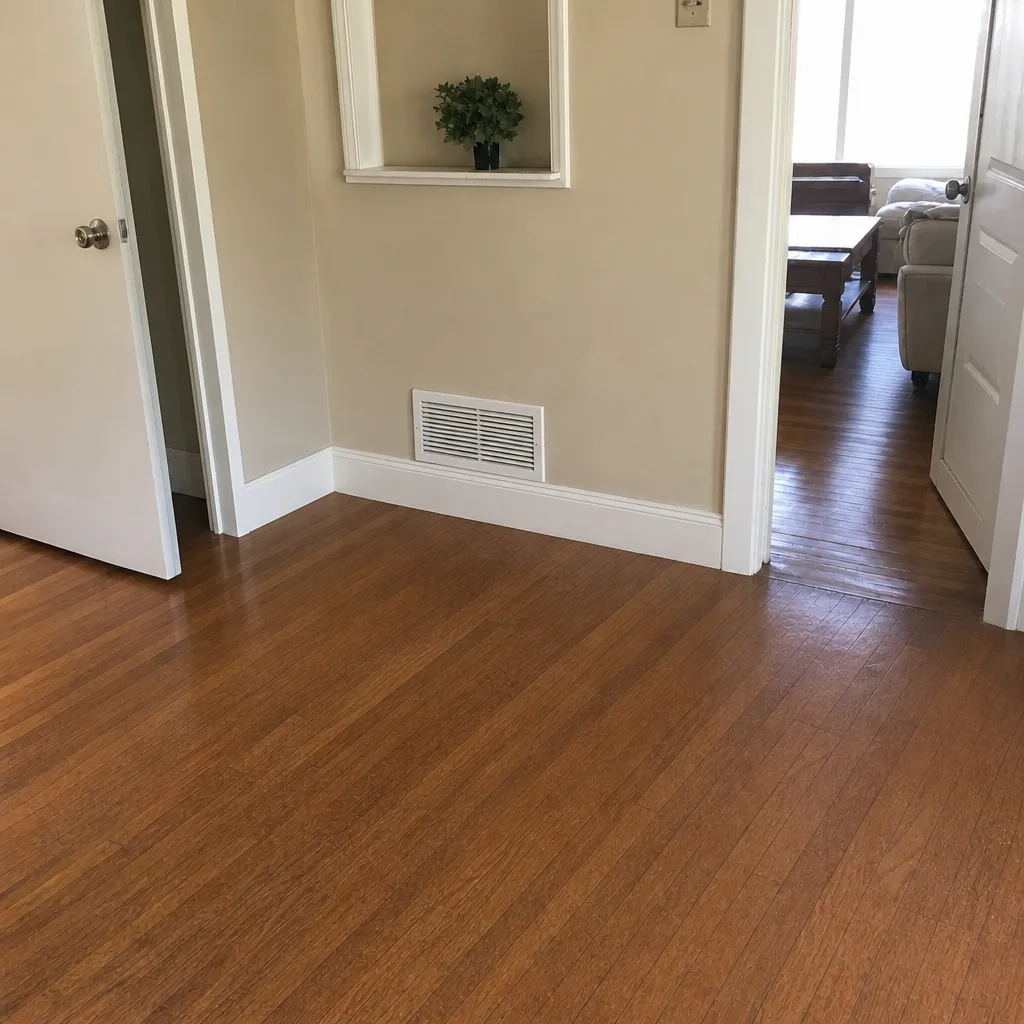 After
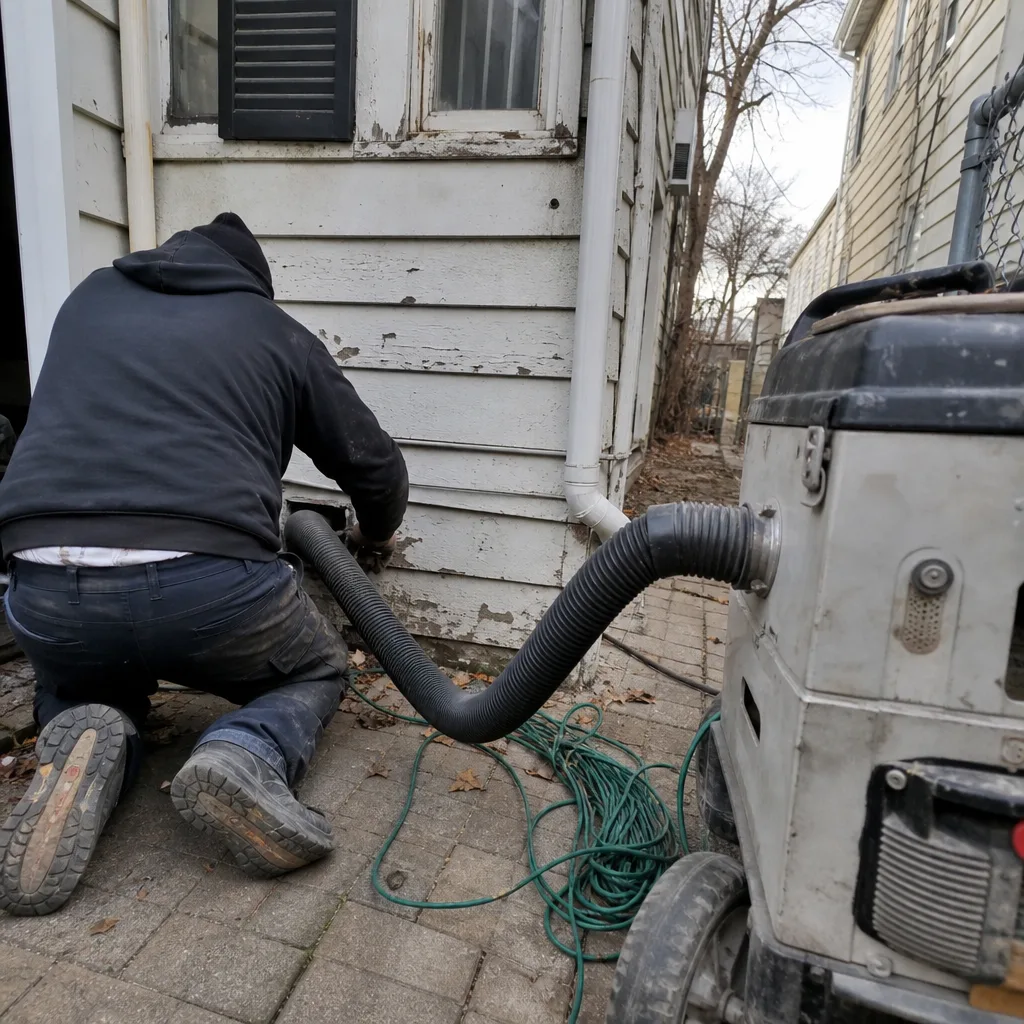 Before
 After
 Before
 After
When to Call a Professional
Call a professional when you’re noticing symptoms rather than a schedule: a musty smell when the system first kicks on, visible dust blowing out of the registers shortly after a cleaning, or a noticeable drop in airflow to one side of the house. Those are the signals that the system needs a real inspection, not another surface vacuuming. Where a renovation has just wrapped in a South Beach home, post-construction contamination is worth a professional look before the first full heating or cooling cycle.
For anything involving duct sealing, new ductwork, or air-handler modification, call a professional and confirm scope and licensing before starting. Cleaning company for the cleaning, licensed mechanical contractor for the modification. Air Duct Cleaning South Beach offers free estimates in South Beach – call (877) 792-7501. We answer 24/7. Fast dispatch from 7am to 7pm, Sunday through Friday.
Frequently Asked Questions
No. Routine air duct cleaning in South Beach is maintenance and doesn’t require a permit. A permit becomes relevant only when the work changes the duct system, for example cutting a new supply or return, replacing duct sections, or modifying the air handler. If your quote is cleaning only, no permit is involved.
In most New York jurisdictions, yes, when sealing is performed as a system-level repair rather than a spot touch-up at a joint during cleaning. The distinction is the scope: a technician sealing one loose joint during a cleaning is doing maintenance; a project that reseals the trunk and branches for performance reasons is mechanical work and typically requires a licensed mechanical contractor and often a permit. Confirm scope in writing before agreeing.
Ask for the license number and issuing authority in writing, then confirm them against the state or local building department’s records. A license to clean ducts isn’t the same as a license to perform mechanical work, so ask specifically which scope the license covers and confirm it applies to the entity on your contract. Call (877) 792-7501 for a free estimate on the cleaning portion.
Keep the written estimate, final invoice with scope spelled out, contractor name and license info for any mechanical work, insurance certificate, before-and-after photos of your system, and any permit or inspection records. A buyer’s inspector will ask; a clean packet ends the conversation quickly and prevents the buyer from requesting a credit at closing.
Yes, in practice. Shared duct systems in a multi-unit building often run through fire-rated assemblies, and any modification that touches those penetrations falls under mechanical-code and fire-code review. Cleaning alone stays inside the existing system and generally doesn’t trigger those requirements. Coordinate scope with the building’s management before scheduling anything beyond cleaning.
Depends on the company and where the scope lands. A cleaning crew can handle minor joint touch-ups during cleaning. For any project-scale sealing, liner work, or duct modification, you want confirmation of who’s licensed for that work and who pulls the permit. Ask before work begins: if the same company can’t clearly state their mechanical license and permit arrangement, split the job into cleaning and modification with a licensed mechanical contractor on the second part. Call (877) 792-7501 for a free estimate on cleaning, air duct cleaning South Beach, and to talk through scope and next steps.
The Bottom Line
In South Beach, NY, routine air duct cleaning needs no permit and no mechanical license. Duct modification does. The line between the two is scope: cleaning stays inside the existing system, modification changes it. Before any duct job, get the scope in writing, verify license and permit coverage for whatever falls on the modification side, and keep a document trail that includes photos, invoices and (where applicable) permit records. That’s the whole game. Everything else – the equipment brands, the number of service categories, the sanitizing products – matters for how well the job gets done, but the documentation question is the one that protects the homeowner at resale and at claim time. Air Duct Cleaning South Beach offers free estimates in South Beach – call (877) 792-7501. We answer 24/7. Fast dispatch from 7am to 7pm, Sunday through Friday.
Written by the team at Air Duct Cleaning South Beach.