
Guardsman Air Duct Cleaning in South Beach: A Homeowner’s Guide
Owning a Guardsman system and knowing how to run one are not the same thing, and the difference shows up in your post-cleaning air quality. If you’ve ever watched a crew run a brush through a register for two minutes and call it a cleaning, you already know the brand printed on the machine tells you almost nothing about the hands controlling it. So here’s how the equipment actually works, what a proper Guardsman setup in a South Beach home looks like, and the questions that separate a real service call from a very expensive photo op.
If you’d rather skip the auditing and just get the work done, call (877) 792-7501. We answer 24/7 and run fast dispatch from 7am to 7pm.
How Does a Guardsman System Actually Clean Ducts?
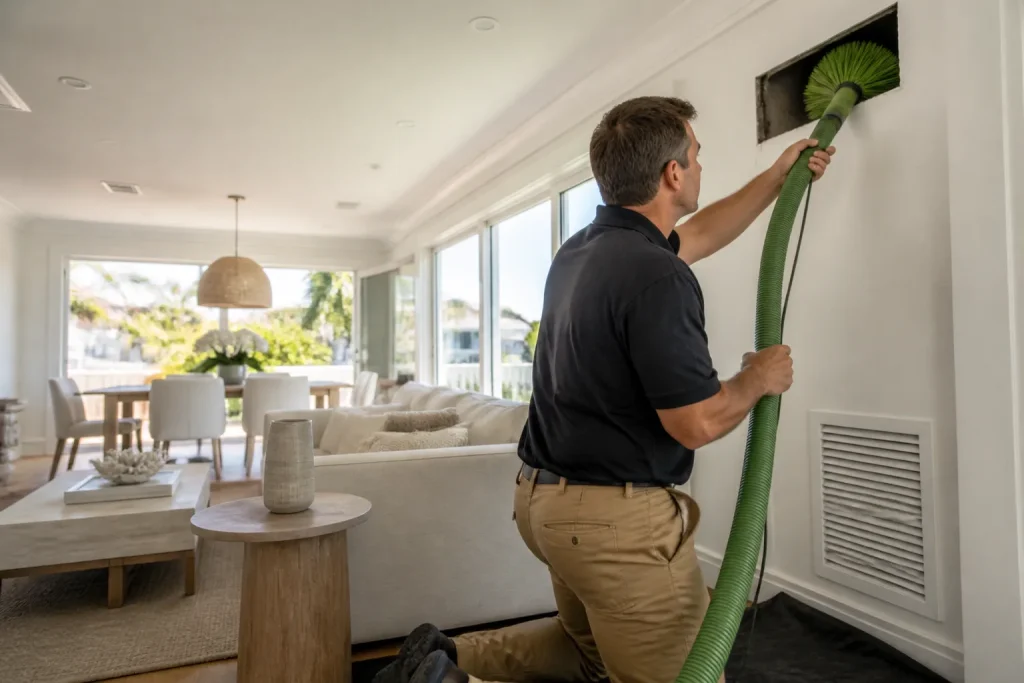
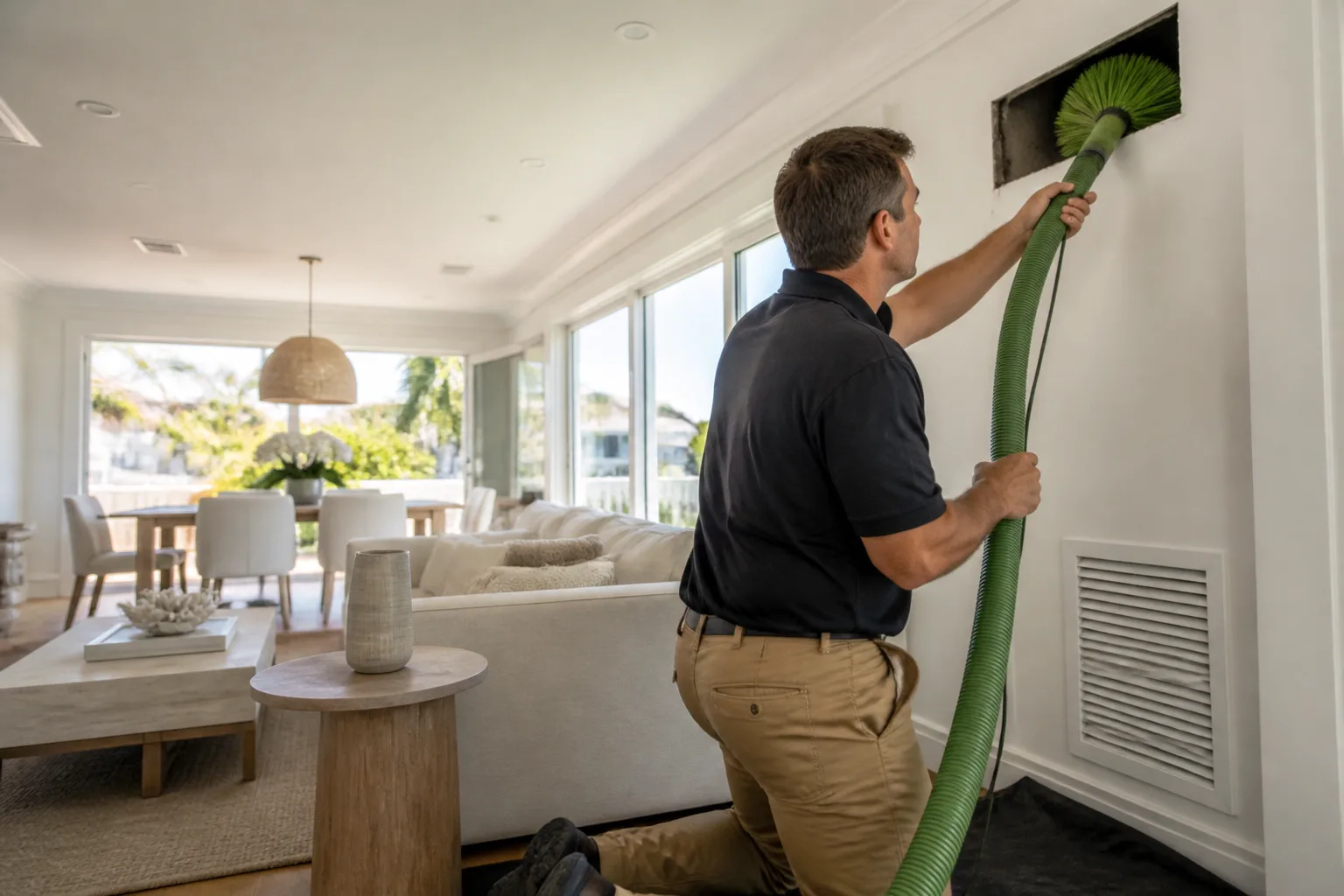
A Guardsman air duct cleaning system cleans by contact and capture at the same time. A motorized rotating brush makes physical contact with the duct wall while a high-capacity vacuum pulls loosened debris out through negative pressure. The two halves run together: the brush frees what’s stuck, the vacuum carries it away before it can resettle.
That’s the whole idea, and it’s why the approach beats vacuum-only service on surfaces where dust has actually bonded to the metal.
Here’s what vacuum-only misses. Inside a residential duct run, dust doesn’t stay loose. Heat cycling, humidity swings, and years of use press it against the duct wall until it behaves less like dust and more like a thin coating. Suction alone pulls at the top layer and leaves the rest. A rotary brush physically breaks that bond. In our experience, this is the difference homeowners notice most: the air coming out of the registers after the work is done smells and feels different, because the coating that was feeding it is gone.
Guardsman equipment is contact-cleaning equipment. A crew that runs a vacuum without a properly matched brush is doing half the job and billing for all of it.
What Does a Proper Guardsman Setup Look Like in a South Beach Home?
Proper Guardsman setup in a South Beach house comes down to three things: where the access points go, whether negative pressure is verified before cleaning starts, and whether the brush speed matches the duct diameter. Miss any one of them and the equipment underperforms no matter how good the machine is.
- Access point placement. A real setup opens the main trunk line at strategic points, not just the branch runs. Trunks carry the most volume and hold the most debris, and cutting access correctly is what lets the brush reach the full run.
- Negative pressure verification. Before the brush goes in, the crew should confirm the vacuum is actually pulling. Registers get sealed during this phase so the system isn’t drawing household air through every gap. A crew that cleans with registers open is fighting its own vacuum.
- Brush speed matched to duct diameter. Rotary brushes have settings. A wide trunk needs a different speed and head than a narrow branch run. Running one setting everywhere is the fastest sign a technician is going through the motions.
What you should see: sealed registers, a running vacuum connected before any cleaning begins, and a technician selecting a brush head rather than grabbing whatever’s closest. In a South Beach home with flex duct sections mixed into the trunk, that selection matters even more, because flex requires a gentler approach than rigid metal.
Why Guardsman Contact Cleaning Matters More in South Beach Conditions
South Beach’s climate works against vacuum-only duct cleaning. Warm, humid air moves through the system for most of the year, and moisture binds dust to duct walls in a way dry climates don’t. The result is debris that sits tighter and resists suction. Guardsman’s brush-and-vacuum mechanism is built for exactly this: the brush breaks the humidity-set bond, and the vacuum captures the result.
There’s a second factor. In a dense, mixed-housing neighborhood like South Beach, homes share more than a ZIP code. Construction dust from neighboring renovations, pollen moving off the trees, and cooking residue from kitchens in close proximity all find their way into return air. That mix adheres. A brush approach removes it; a shop vac passes over it.
None of this makes Guardsman unique to South Beach. The physics are the same everywhere. What changes is the load: the local air carries more adhered material, so the mechanical half of the system has to work harder and longer, not just run for a nominal interval and clock out.
Red Flags: A Crew With the Equipment but Not the Protocol
You can have Guardsman equipment on the invoice and a shop vac effort in the walls. These are the signs to watch for:
- Main trunk lines skipped. If a crew cleans every register but never opens and brushes the trunk, they’ve done a partial job. Ask directly which main lines were cleaned.
- Registers not sealed during the negative pressure phase. Unsealed registers mean the vacuum is pulling household air, not duct air. Ask the technician what’s sealed before they start.
- No access cuts. Guardsman cleaning requires access points. If no access work is performed, the brush never reaches the full duct length.
- No brush head changes. A single setting for the whole house means the diameters were never considered.
- Rushed timeline. Full-system mechanical cleaning takes time. When a crew is in and out in a fraction of the expected window, the contact phase didn’t happen.
None of these require technical expertise to spot. You’ll see them from the hallway.
How Do You Confirm Guardsman Equipment Is Actually on Site?
Ask to see the machine before work starts. A crew running a real Guardsman system expects the question, and the equipment will be visibly present, connected, and running. If the answer is vague or the machine never appears, the brand on the website didn’t translate to the driveway.
A few questions to ask on arrival:
- Can I see the Guardsman unit before you begin?
- Where will the access points go, and will the trunk lines be cleaned?
- Will the registers be sealed during the vacuum phase?
- How do you choose brush speed for different duct sizes?
A technician who can answer those in plain language is running the protocol. One who deflects them is doing a reset. This is the same standard we’d apply to our own crew: we use Rotobrush rotary-brush extraction alongside our vacuum systems, and we can walk any South Beach homeowner through the setup before the first access cut. Honeywell and Aprilaire filtration hardware often shows up in these systems too, and if it’s already installed, it’s worth having the technician confirm the filter is sized correctly for the cleaned ductwork.
When to Call a Pro
Some maintenance is homeowner work. Duct internals are not. The rotary brush and negative pressure combination that makes Guardsman effective is also why it requires trained hands: a brush run at the wrong speed through flex duct can tear it, and a vacuum connected incorrectly pressurizes a system instead of evacuating it. If you’re seeing visible dust from registers, an unexplained musty smell, or a system that runs longer than it should, that’s the point to bring in someone. Our technicians have up to 12 years of experience running this equipment, and we work to a written estimate so you know the scope before anyone touches the ductwork.
Dryer vent cleaning is worth pairing with a duct visit while the equipment is on site. It’s a fire risk most duct cleaners don’t address, and it’s dryer vent cleaning we handle in the same visit. For whole-system work that includes the coils and the air handler, our HVAC cleaning service covers the equipment side of the picture. If you just want a straight read on what’s in your air duct cleaning scope, start there and we’ll map it out.
The Bottom Line
Guardsman earns its reputation through a contact-cleaning mechanism: a rotating brush working with negative pressure to remove what vacuum alone can’t. The brand means something only when the crew running it places access points correctly, seals registers during the pressure phase, and matches brush speed to duct size. In South Beach, where humidity binds dust to duct walls and shared housing brings extra particulate into the return air, that distinction matters to what you breathe after the visit.
The questions above are your filter. If the answers line up with a real protocol, you’ve found the right crew. If you’d like a free estimate, call (877) 792-7501. We answer 24/7 with fast dispatch from 7am to 7pm, Sunday through Friday.
Frequently Asked Questions
Yes, when the crew runs the equipment correctly. A Guardsman system with proper brush-to-duct matching and verified negative pressure removes adhered debris that vacuum-only service leaves on the walls. A crew with the brand but no protocol provides no advantage over a generic one. Ask to see the machine and ask which trunk lines will be cleaned before you book. Call (877) 792-7501 for a straight estimate.
It varies with the number of registers, duct layout, and how much adhered debris is present. A full mechanical cleaning with the contact phase done properly runs noticeably longer than a quick suction pass. If a crew finishes in far less time than the scope suggests, the brush phase didn’t happen. Call (877) 792-7501 and we’ll give you a range based on your layout.
Yes, from three things: whether access points were cut into the trunk lines, whether registers were sealed while the vacuum ran, and whether you saw the Guardsman unit connected before work started. Ask for before-and-after photos of your own ductwork as well. A technician can talk through the process if the equipment was genuinely in use. Call (877) 792-7501 to schedule.
It does. The brush-and-vacuum design is built for humidity-adhered dust, which is the harder part of cleaning in South Beach’s climate. The brush breaks the bond; the vacuum captures what’s released. That’s a functional advantage in any climate, but it matters more here. Call (877) 792-7501 if you want an inspection or a quote.
Written by the team at Air Duct Cleaning South Beach.
Need Air Duct Cleaning Help?
Call Air Duct Cleaning South Beach - the local pro we connect you with is licensed and insured, here with fast help in South Beach.
(877) 792-7501